AI Overview
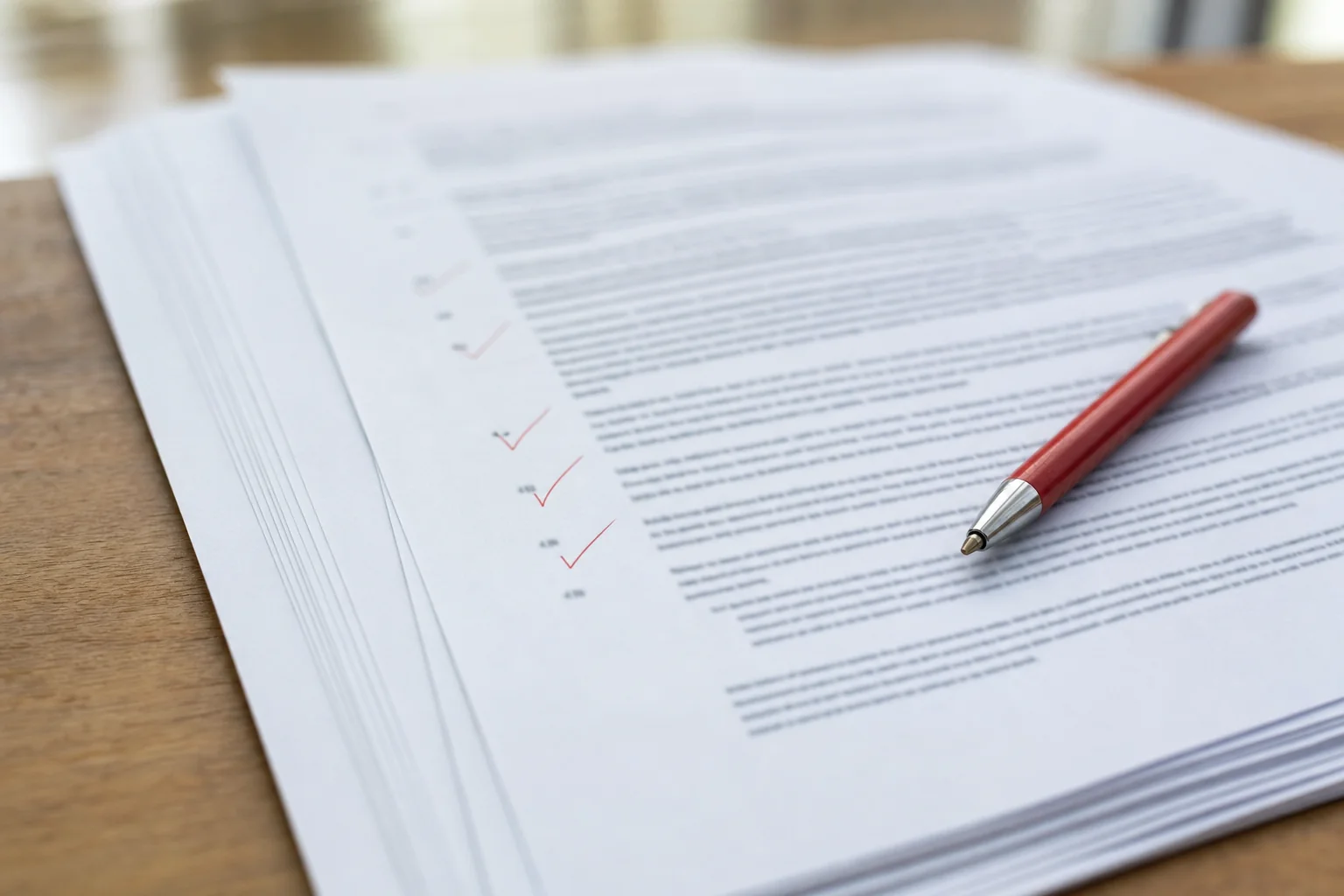
A commercial subcontract is drafted by the head contractor to push risk down onto the subbie who signs it, so the front-page dollar figure is the least important part. The clauses that decide whether you keep your margin, payment terms, variations, liquidated damages, retention and defects, are buried further back. Before you sign, check the scope against what you actually priced, because unpaid scope creep is where most subbies lose money, not on the work they quoted.
Key Highlights
- The subcontract protects the builder, not the subbie, read it that way
- Payment terms and pay-when-paid clauses decide your cash flow, check them first
- Variation notice periods are strict, miss one and you do the extra work for free
- Liquidated damages can make you wear a delay someone else caused
- Retention is your money held for months, know when it is released
- Cross-check the contract scope against your price to find unpaid scope creep
Why the Contract Deserves an Hour of Your Time
The subcontract that lands in your inbox is not a neutral document. It has been drafted by the head contractor's lawyers with one job, to move as much risk as possible off them and onto you.
We have been through these agreements for subbies more than once, and the story is always the same. Fifty pages, heavily in the builder's favour, full of terms you have to comply with that were never in the price. Our job is to read it and tell you, in plain words, they want you to do this, but you did not allow for it, and we do not agree with that clause.
Nobody loses a house over the work they quoted. They lose it over the clause they did not read.
You do not need to become a lawyer to protect yourself. You need to know which clauses matter and what a fair version of each one looks like. This checklist covers the ones that cost subbies money most often in Western Australia.
The Clauses to Check Before You Sign
| Clause | What to Check | Red Flag |
|---|---|---|
| Payment terms | How many days from claim to payment | 45 days or more, or payment tied to the head contractor being paid |
| Scope of works | Exactly what is included, in writing | Catch-all wording like 'all works reasonably required' |
| Variations | Notice period and how extras are valued | A short notice window or 'no claim without prior written approval' |
| Liquidated damages | The daily rate and what triggers it | You wearing damages for delays outside your control |
| Retention | Percentage held and release milestones | High retention with vague or missing release dates |
| Defects liability | Length of the period and call-back terms | A long period or an open-ended definition of a defect |
| Termination | When the builder can end your contract | Termination for convenience with little or no notice to you |

A Real Clause We Have Flagged
One subcontract we reviewed had a clause that said if the subbie was not on site by a certain date, the builder could take their equipment, bring in someone else to finish the job, and charge the subbie the difference. That is not a payment risk, that is your gear and your money gone. Clauses like that are exactly what a review is for. They are in there, and they are easy to miss on page forty.
Payment and Cash Flow Come First
Everything else is secondary to getting paid. A profitable job on paper can still break a subbie if the money arrives too slowly or not at all.
- Check the payment period, 30 days is common, 45 or more is a cash flow risk on thin margins
- Look for pay-when-paid or pay-if-paid wording, it means your payment depends on someone above you being paid first
- Confirm the claim date each month and the process for submitting a progress claim
- Check whether retention is deducted from every claim and when it is released
- Note any requirement for a bank guarantee or security, which ties up money you may need elsewhere
Pay-When-Paid Is the Clause to Watch
A pay-when-paid clause makes your payment conditional on the head contractor being paid by the principal. If the job goes bad above you, you can end up unpaid for work you completed properly. Western Australia's Security of Payment Act limits how far these clauses can be enforced, but many subcontracts still include them. Flag it, question it, and know your rights under the Act before you sign.
Find the Scope You Are Not Being Paid For
The most expensive part of a subcontract is usually not a single clause. It is the gap between what you priced and what the contract quietly expects you to deliver anyway.
- Set-out, survey and engineering, is it yours or the builder's under this contract?
- Temporary works, propping and edge protection that nobody has clearly priced
- Site clean, waste removal and skips bundled into your rate with no separate line
- Attendance on other trades and standing time caused by the program, not by you
- Handover paperwork, test certificates and compliance documents that take real hours
Read the scope with your own price open beside it. Anywhere the contract asks for something your price never allowed for, you have found either a variation to claim or a number to renegotiate before you commit.
When to Stop and Call a Lawyer
Sometimes the honest answer is that the contract is bad and the job is not worth it. We had a subbie whose builder was letting them down and the job was not ready, so they wanted out. We read the contract, saw how one-sided it was, and the advice was simple, finish this one and do not deal with them again. That is the kind of straight advice you should get, even when it is not what you hoped to hear.
50+
Pages Typical
On a commercial subcontract
7
Key Clauses
Worth checking every time
WA
SOP Act 2021
Protects your payment rights
1 Hour
Well Spent
Against a job that could sink you

A Review Tells You Where the Risk Is, a Lawyer Deals With It
Working through this checklist, or having an estimator do it with you, tells you what the contract asks of you commercially and where your money is exposed. It is not legal advice. If a clause needs to be legally challenged, redrafted or enforced, that is a construction lawyer's job. The value of the review is knowing exactly which clause to hand them, instead of paying a solicitor to read all fifty pages cold.
Frequently Asked Questions
Not without reading it first. A short signing deadline is a common tactic to stop you scrutinising the contract. If you have not had time to check the payment terms, variations, damages and scope, ask for more time. A head contractor who genuinely wants you on the job will usually give you a day or two. One that will not is telling you something.
A pay-when-paid clause makes your payment conditional on the head contractor being paid by the principal above them. It shifts the risk of non-payment down the chain onto you. In Western Australia the Security of Payment Act limits how far these clauses can be enforced, but they still appear in subcontracts. Always flag one and understand your rights before you sign.
Yes, for the commercial and scope side. An estimator who works in construction contracts every day can flag the payment, variation, retention and scope risks in plain terms and cross-check the contract against your price. That is different from legal advice, which is a solicitor's job. For most jobs the commercial review is what actually saves you money.
Retention is a percentage of each progress payment the head contractor holds back as security, commonly around five percent. Half is usually released at practical completion and the rest at the end of the defects liability period. Check the exact percentage and the release milestones in your contract, because vague or missing release terms are how retention money quietly disappears.
Ready to Price Your Job
Reading about it is one thing. Getting the real numbers off your own plans is another. Send yours through and we will do a proper takeoff for you.
Written by the Perth Construction Estimating Team
Our estimators have 18+ years across commercial and residential construction and price Perth jobs every week. We work off real WA supply and labour rates, not a generic national card, so the numbers hold up on site.
More About Our Estimators