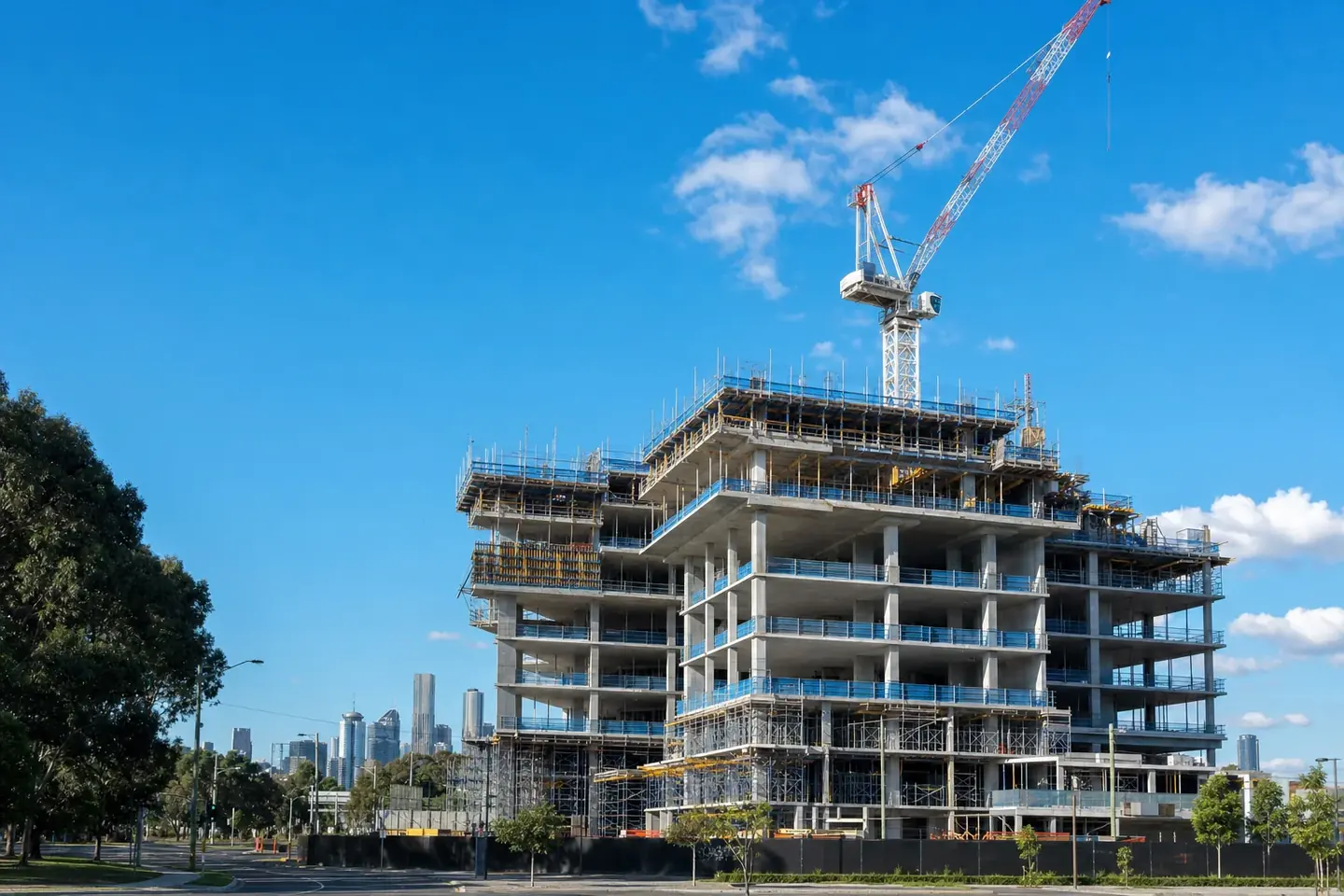
Commercial Estimating Perth
Fit-outs, base builds and refurbishments measured against the full document set, with the discrepancies flagged before you commit to a price. Two to three days on most commercial packages.
- 18+ years experience
- First estimate free
- 24hr turnaround
- No lock-in contract
The Risk Is In The Documents, Not The Quantities
Measuring a commercial job is the straightforward half. The half that costs people money is the specification saying one thing, the drawing saying another, and neither of them saying who is responsible for the bit in between.
So a commercial estimate from us starts with the documents. We read the architectural set, the structural set and the specification against each other, and every clash and gap comes back to you in writing before you price it.
Send the tender set through. First estimate is free, and you will see the query list whether you use the number or not.
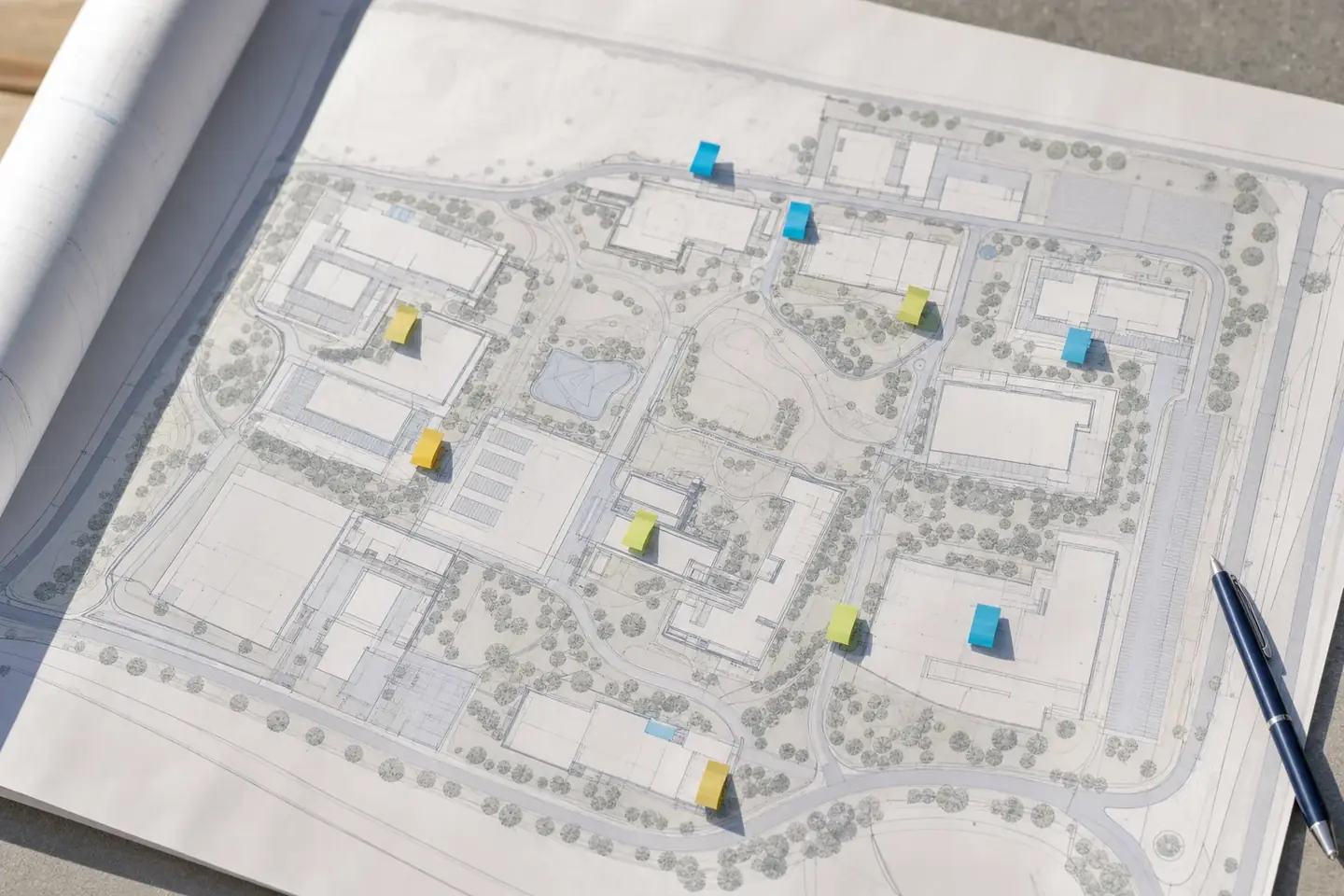
Commercial Project Types We Price
Different sectors carry different documentation and different risk. The scope delineation between trades is where most of the argument happens, so it gets written down.
| Project Type | Typical Scope | Where the Risk Sits |
|---|---|---|
| Retail and hospitality fit-out | Tenancy fit-out, shopfront, services rough-in and finishes | Landlord works versus tenant works, and the after-hours access condition |
| Office fit-out and base build | Partitions, ceilings, services, joinery and floor finishes | Base building interface and what the make-good clause obliges at the end |
| Healthcare and aged care | High-specification finishes, services and hygienic linings | Specification detail and staged work in an operating facility |
| Education and institutional | Classrooms, amenities, external works and covered areas | Working around term dates and site access windows |
| Mixed use development | Residential above commercial, with two sets of requirements | Trade delineation between the residential and commercial packages |
| Refurbishment and upgrade | Strip-out, structural changes, services upgrade and finishes | What is behind the existing fabric and what the strip-out reveals |

What a Commercial Estimate Includes
A full quantity takeoff in trade units, a colour-coded markup you can trace every figure back to, a written query list covering discrepancies and unclear items, and a priced spreadsheet with each trade package kept separate. Where the scope touches another package, the boundary is stated rather than assumed.
Two to Three Days, and Why It Is Not One
Most residential work goes back inside 24 hours. Commercial takes two to three days, and the extra time is not measuring.
It is reading a specification against a drawing set, finding where they disagree, and writing that down so you can raise it as a request for information before the tender closes rather than as a variation afterwards.
What Happens In Those Days
- Architectural, structural and services sets read against each other
- Specification and finishes schedule checked against what is drawn
- Scope boundaries between your package and the ones either side of it
- Quantities measured in proper trade units, nothing back-calculated from floor area
- Provisional and prime cost items identified and listed as their own lines
- A written query list, so the ambiguity is on the record before you price it
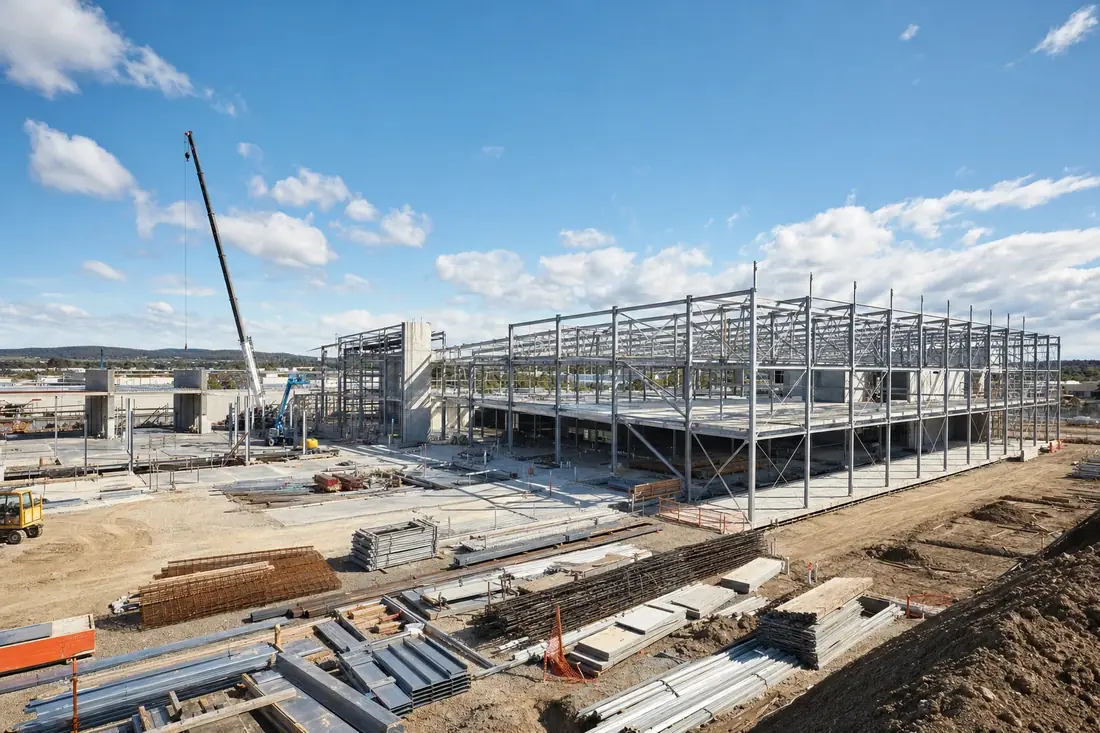
The Documents That Decide the Price
A commercial tender set is several documents that do not always agree with each other. Knowing which one governs is the difference between a priced job and an argument.
| Document | What It Governs | What Goes Wrong |
|---|---|---|
| Architectural drawings | Layout, setout, finishes locations and the general arrangement | Priced on their own, as though the specification behind them says nothing |
| Structural and services sets | Framing, slabs, connections, and the services that have to be coordinated | Read after the measure instead of during it, so clashes surface on site |
| Specification | Finish classes, tolerances, testing, inspection and hold points | Skimmed, when it is the document that actually sets most of the rates |
| Scope of works | The boundary between your package and the ones either side | Left vague, so two trades both assume the other one carries an item |
| Finishes schedule | What goes where, by room and by surface | Out of step with the drawings, and nobody says which one wins |
| Contract conditions | Payment terms, time bars, retention and make-good | Read after the price is submitted, when the terms can no longer be negotiated |
| Addenda | Everything that changed after the set was issued | Missed entirely, so the price answers a superseded question |
Why the Addenda Matter More Than They Look
A late addendum can move a finish class, a hold point or a whole scope boundary, and it arrives as a separate PDF that is easy to file and forget. Every set we price is checked for addenda, and if one is missing from what you sent we ask for it before the measure starts.

How We Price a Commercial Job
Most of those two to three days is reading, not measuring. On a commercial set the money sits in the documents around the drawings.
- 01
Tender Set Received
Drawings, specification, scope of works and the contract conditions if you have them. We confirm on the day what is in the set and what is missing from it.
- 02
Read the Specification First
The specification is read before a quantity is taken, because that is where finishes, tolerances, testing, inspection and hold points live.
- 03
Structure the Trade Packages
The job is broken up the way it will actually be let, so each sheet can go straight out to the subbie who has to price that package.
- 04
Measure and Colour-Code
Every package is measured off the calibrated drawings and marked up in its own colour, with provisional sums and prime cost items kept on their own visible lines.
- 05
Price the Preliminaries Separately
Access, temporary works, site establishment, cranage and hoarding are priced as their own lines rather than buried in a percentage on top of the trades.
- 06
Query List and Delivery
Every conflict between drawing and specification goes on a written query list beside the priced spreadsheet, so you know what you are carrying before you submit.
Where the Time Actually Goes
On a residential job the drawing carries most of the information and the measure is the work. On a commercial job the specification carries it, and the reading is the work. That is the whole reason the turnaround is different.
What Runs Alongside a Commercial Estimate
A commercial job needs more documents than a price. These are the ones that usually come next, and they are built off the same set we have already read.
| Document | What It Gives You |
|---|---|
| Quantity takeoff and bill of quantities | The measured document behind the price, structured so each trade package can go straight to the subbie who prices it |
| Sub-contract review | Payment terms, time bars, retention, variation clauses and make-good obligations read and reported before you sign |
| Construction program | A program built to your scope, the milestones in the contract and the access windows the site actually allows |
| Progress claims and variations | Claim schedules that line up with the contract's payment terms, and variations priced off the same measured base |
| O&M manuals and handover | The handover documentation that releases practical completion, compiled while the trades are still contactable |
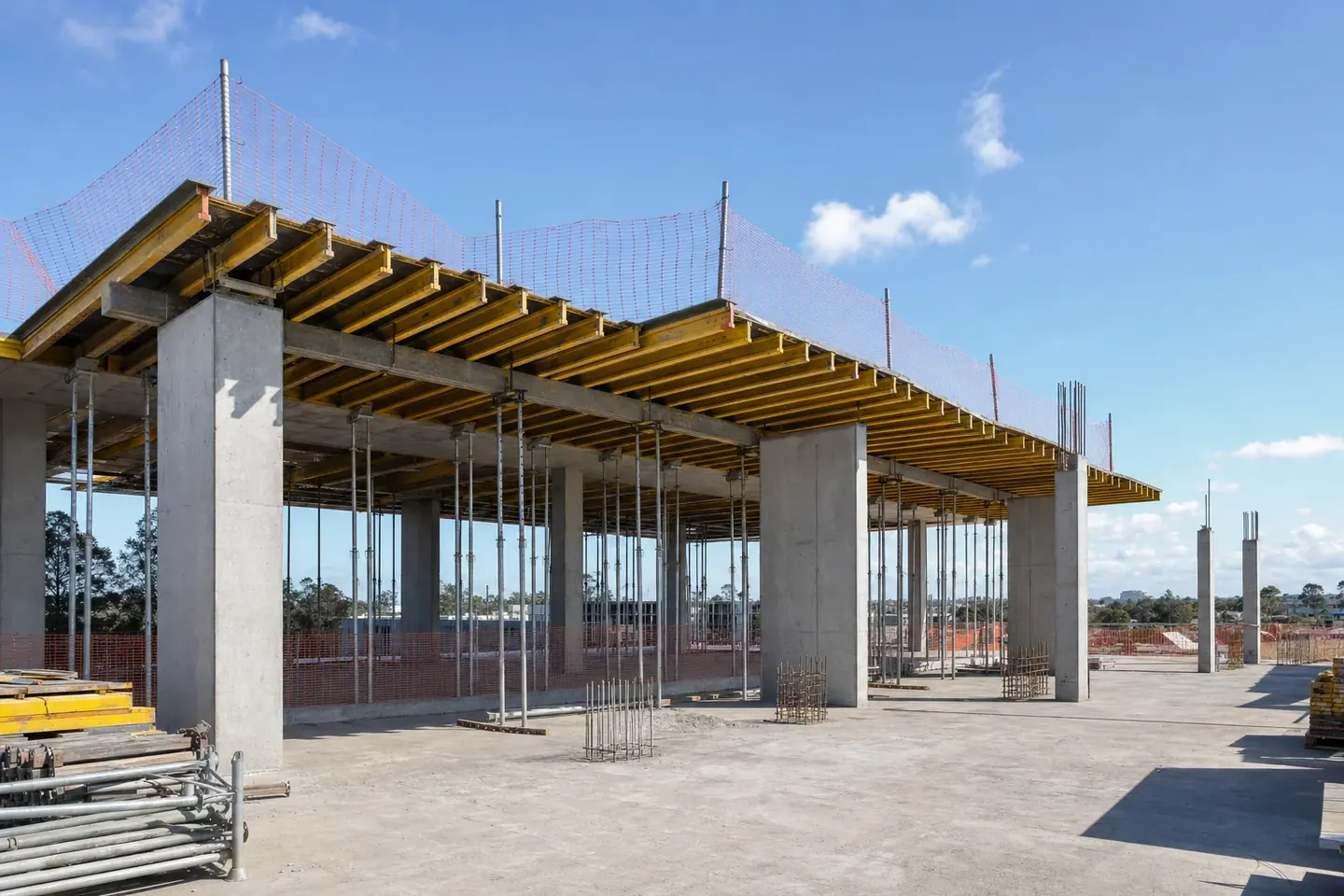
The Contract Is Half The Job
A commercial subcontract is long and it is written by the head contractor, which tells you whose interests it is arranged around.
An accurate price on a job with a bad payment schedule, an unfair time bar or a broad make-good clause is still a bad job. The estimate and the contract are the same decision.
| Clause | What It Decides | What to Look For |
|---|---|---|
| Payment terms | When money actually arrives after you claim | The claim date, the assessment period and the days to payment, added together |
| Time bars | How long you have to notify a delay or a variation | Short notice periods that kill a valid claim before anyone prices it |
| Retention | How much of your money is held, and until when | The release trigger, and whether it depends on somebody else's completion |
| Variations | How a change is valued and who has to approve it | Whether the rates in your tender are binding on work nobody has seen yet |
| Make-good and defects | What you have to return to, and for how long | A broad make-good obligation that reaches past your own package |
| Program and access | When you can be on site and for how long | Access windows that assume a sequence the program does not support |
Where a Commercial Tender Loses Money
None of these are exotic. They are what happens when a commercial set is priced the way a house is priced.
- Measuring the drawings without reading the specification that governs them
- Missing an addendum, so the price answers a set that has been superseded
- Preliminaries carried as a percentage instead of priced against the program
- Scope boundaries assumed, so two packages both leave out the same item
- Provisional sums absorbed into a rate where nobody can see them again
- A make-good obligation read after the tender rather than before it
A discrepancy found before the tender closes is a question. The same discrepancy found after it is a fight about a variation.

The One That Costs Most
Preliminaries. Access, temporary works, cranage, hoarding and site establishment are time-related, and a percentage on top of the trades has no relationship to how long the job actually takes. On a staged commercial fit-out that gap is regularly the whole margin.
What We Need, and What You Get Back
Send what the tender gave you. If something is missing from the set you hear about it on the day it arrives, not at the end.
2-3 days
Commercial turnaround
Most tender packages
Free
First estimate
No lock-in contract
WA
Local supply rates
Not a national card
18+
Years estimating
Residential and commercial
What To Send
- The full drawing set, including structural and services
- The specification, and the finishes schedule where there is one
- Your scope of works, and which packages you are pricing
- Every addendum issued since the set went out
- Contract conditions, if you want the terms read alongside
- Your tender date, so we can tell you the same day whether it fits
What Comes Back
- A quantity takeoff in proper trade units, package by package
- A colour-coded markup every figure can be traced back to
- A priced spreadsheet with the packages kept separate
- A written query list of every discrepancy and unclear item

First Commercial Estimate Free
Send the tender set with the specification and your scope of works. You get the takeoff, the markup, the priced spreadsheet and the query list. First one is on us, and there is no lock-in contract after it.

Common Questions
Straight answers on how we price commercial estimating in Perth. If yours is not here, send your plans and just ask.
Two to three days on most commercial packages, against 24 hours on most residential work. The extra time is document review rather than measuring. If you are up against a tender deadline, tell us the date when you send the set and we will tell you straight away whether it is achievable.
Both. A subcontractor package is one trade measured properly with your own rates in the sheet. A head contractor estimate covers every package with a separate total for each, so nothing gets blended and each sheet can go to the subbie who has to price it.
We flag it in writing and price to the option we think is most likely, with the assumption named on the document. We do not quietly pick one and hand you a number, because the difference between the two readings is exactly the money that becomes a variation argument later.
They are identified and listed as their own lines rather than absorbed into a rate. Where the documentation gives enough detail to price the underlying work we will price it and say so; where it does not, the line stays visible so it is obvious to everyone that a number is still to come.
Yes, and it is the better way to do it. The same document set drives both, and knowing the payment terms while the price is being built means the risk in the contract is visible at the point you decide whether to tender at all.
Yes, and on their own lines rather than as a percentage sitting on top of the trades. Access, temporary works, cranage, hoarding, site establishment and the time-related costs are priced against what the program and the site conditions actually require. A percentage is a guess, and it is the kind that gets discovered on the job.
Tell us the date when you send the set and you get an answer the same day on whether it is achievable. Most commercial packages run two to three days. Where a deadline is tighter than that we will say so rather than agree to it and hand you something thin.
Related Services
Other estimating services that often go alongside Commercial Estimating.

Sub-Contract Reviews
We review commercial subcontracts and flag the risky clauses and scope gaps before you sign
View Service
Tender and Bid Estimating
End-to-end tender pricing support, from reviewing documents and querying discrepancies through to final submission
View Service
O&M Manuals and Handover Documentation
Operation and maintenance manuals compiled and indexed, so the handover clause stops holding up your final claim
View Service
Quantity Takeoff and Bill of Quantities
Full colour-coded plan markup with legend plus a structured BoQ spreadsheet ready to send to subbies
View Service
Get Your First Estimate Free
Send us your plans and we will take it from there. First job is on us, 24-hour turnaround on most residential jobs, and no lock-in contract.