AI Overview
Perth concrete budget blowouts follow predictable patterns. The most common causes are site access constraints that increase labour and pump costs, sand pad and fill requirements that are not shown on the plans, and reinforcement changes between the estimate and the pour date. Most blowouts are preventable with a thorough pre-pour review of plans, geotechnical reports and site conditions.
Key Highlights
- Site access issues can turn a simple pour into a two-day job with extra equipment
- Sand pad requirements are often absent from plans but a real cost on Sandy Perth sites
- Pump hire selection matters - the wrong pump for the job adds cost and delays
- Reo changes after the estimate is done are a common source of unexpected variation claims
- Weather delays on large pours cost standby time and can affect the mix specification
- Waste factors are often underestimated on irregular or complex slab shapes
- Variation orders during the job are the surest way to blow the original budget
Why Concrete Budgets Blow Out in Perth
A concrete budget blowout rarely comes from a single catastrophic mistake. It usually comes from five or six small items that each add a few thousand dollars to the job, none of which were in the original estimate.
After 18 years of estimating Perth concrete work, the same issues come up. They are mostly preventable if you know what to look for before the job starts.
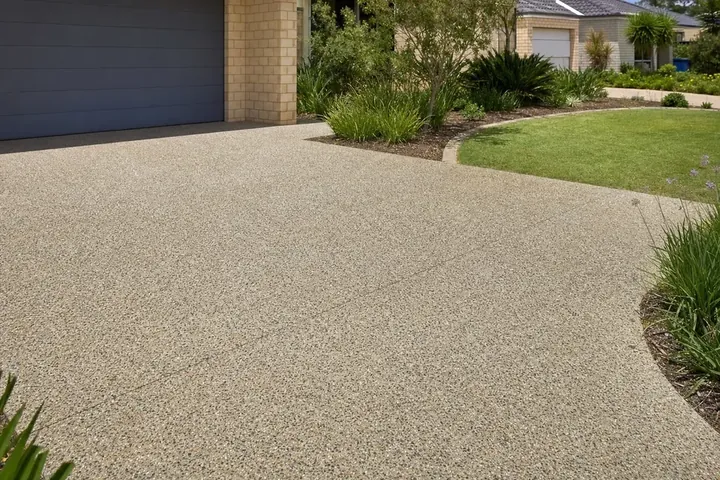
One thing we are always upfront about: we price exactly what is on the plans. Sometimes there is variance between the drawing and what happens on site, and with a finish like exposed aggregate a different batch of stone can look different again. We tell you that going in, so nobody gets a surprise at the pour.
7
Common blowout causes
On Perth concrete jobs
18+
Years estimating
Perth residential and commercial
Most
Blowouts preventable
With a pre-pour plan review
24hr
Estimate turnaround
Residential jobs
1. Site Access Problems
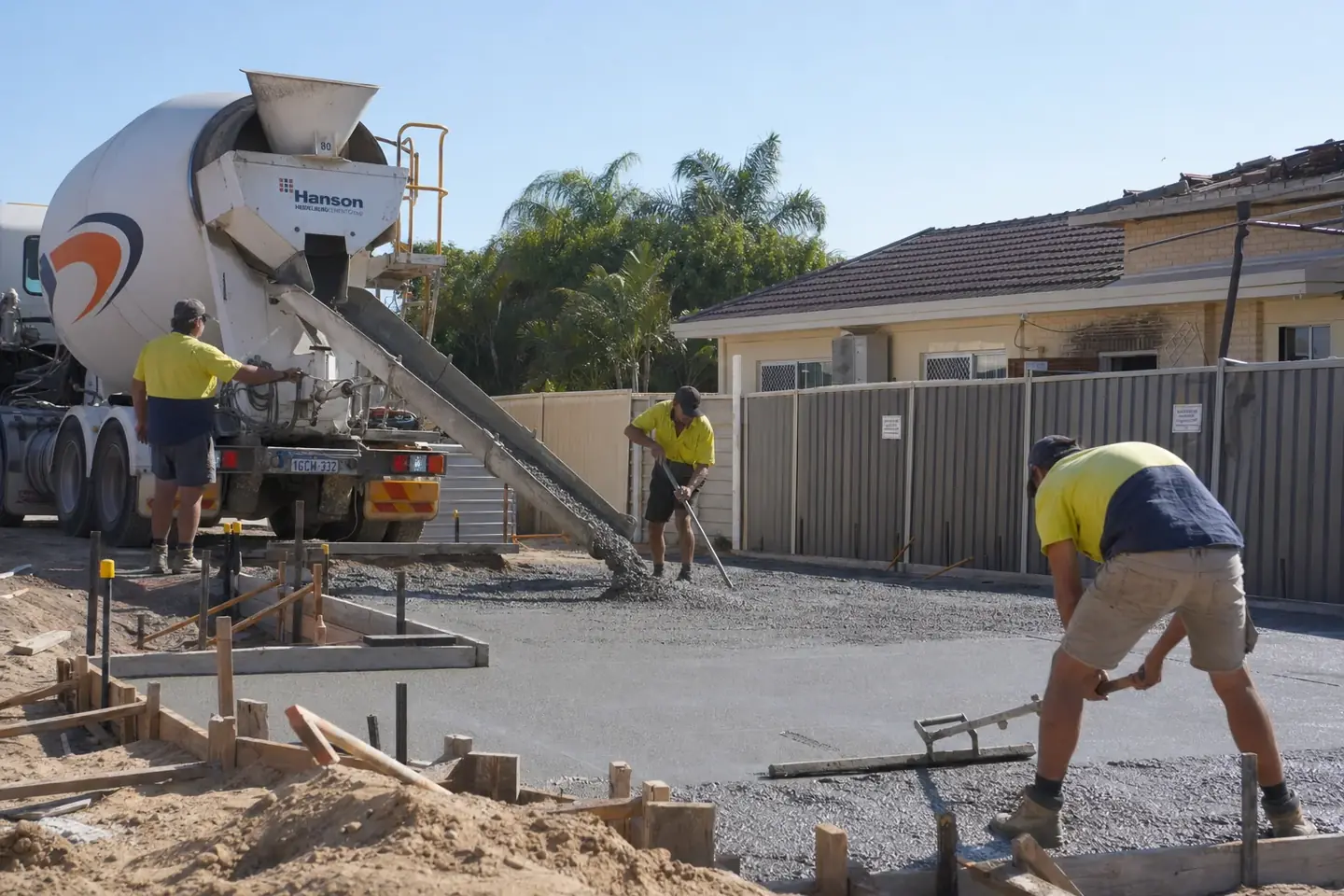
Limited site access is one of the most reliable ways to add cost to a concrete job. If the agitator cannot get close to the pour, you need a pump. If the pump cannot get a clean line to the pour, you need a boom arm instead of a line pump. Each step up costs more.
Perth residential lots have narrowed over the years. Rear lots, corner developments and infill sites in established suburbs often have access constraints that are not obvious from the plans alone. A site visit before the estimate is priced will show things the drawings do not.

Check the Access Route Before You Price the Pump
A boom pump on a tight Perth lot can cost significantly more than a standard line pump. If your estimate includes a line pump but the site actually needs a boom arm, that difference comes out of your margin. Confirm the access situation before the estimate is finalised.
2. Sand Pad and Fill Requirements
Perth's coastal sandy soils often require a compacted sand pad under the slab, particularly where the lot has been cut or where existing fill is present. The geotechnical report will specify the sand pad requirements, but not all plans clearly show the pad thickness or the sand quality specification.
When the sand pad is missing from the estimate, the cost hits at the preparation stage - just before the pour, when you have no good options for recovery. Procurement, cartage and compaction of a sand pad on a suburban Perth lot is a real cost that needs to be in the estimate from the start.

Where to Find Sand Pad Requirements
The geotechnical report and the structural engineer's slab specification will document sand pad requirements. If neither document is available when the estimate is being prepared, we flag it as a provisional sum rather than leaving it out. An undefined allowance is better than a missing line item.
3. Pump Hire - Wrong Equipment for the Job
Pump hire in Perth is not a standard line item. The right pump depends on pour volume, access, height, distance from the truck and the mix specification. A high-strength mix with a lower slump cannot be pumped the same distance as a standard residential slab mix.
- Line pump - best for straightforward residential pours with good access, lower cost
- Boom pump - required for difficult access, multi-storey, or where the truck cannot park adjacent
- Conveyor - occasionally used on remote or elevated pours where pump lines cannot reach
- Direct chute - only works where the agitator can position above and close to the pour
An estimate that includes a line pump allowance when the job actually needs a boom arm will produce a variation. Getting the pump selection right before the estimate is finalised avoids that conversation with the client.
4. Reinforcement Changes After the Estimate
Structural engineers sometimes issue revised reinforcement drawings after the initial estimate is done. Bar sizes go up, spacing reduces, or additional starter bars are added at a late stage. Each change affects the reo quantity, the fabrication cost and sometimes the pour sequence.
The estimate is only accurate against the drawings it was produced from. When the drawings change, the estimate changes. The professional approach is to update the estimate when revisions are issued - not to assume the original numbers still hold.
Always Confirm Which Drawing Revision Was Estimated
Every estimate should document the drawing revision number and date it was produced from. When revised drawings come in, compare them to the estimated revision before proceeding. A revision that adds N16 bars at the perimeter where the original had N12 is a meaningful cost change.
5. Weather and Standby Time
Perth summers are hot. Concrete placed in direct sun above 35 degrees needs accelerated curing management, possibly a set-retarding admixture and faster finishing crews to stay ahead of the setting time. These requirements add cost that is not always in a standard estimate.
Wet weather on large commercial pours creates standby time. Ready-mix agitators do not wait indefinitely - standby fees apply after the first 30 or 45 minutes depending on the supplier. A pour held up by a crane sequence issue or a site complication will accumulate standby charges that were not in the estimate.

Plan Pours for the Right Time of Year
Where you have a choice, scheduling large residential pours for the cooler months in Perth - April through to October - reduces the risk of hot-weather admixture requirements and faster setting times. It is not always possible to choose, but it is worth building into the project programme when it is.
6. Underestimated Waste Factors
A standard residential slab waste factor of 5 percent works well on a simple rectangular slab. It is not enough for a complex shape with lots of thickened edges, setdowns, steps and service penetrations.
Running short of concrete on a pour is one of the worst positions a concreter can be in. Getting an emergency half-load from a ready-mix supplier in Perth can take an hour or more, and the concrete already placed is setting. The correct waste factor for the actual shape of the slab is not a rounding exercise - it is a judgment call based on the complexity of the pour.
A slab that looks simple on the plans often has more perimeter, more thickened edges and more setdowns than you expect. Take the time to count them properly.
7. Variation Orders During the Job
The most reliable way to blow a concrete budget is to start the job with an incomplete scope. When the client asks for an extra metre of driveway extension, a different finish on the alfresco area or a garden edge detail that was not on the original plans, you have a variation.
A variation ordered verbally on site, without a written instruction and a signed cost approval, is a dispute waiting to happen. Get it in writing before you proceed, get the price agreed, and document it clearly. An uncosted verbal variation is not a variation - it is a gift to the client.
Verbal Variations Cost You Twice
The first cost is the actual material and labour to do the extra work. The second cost is the time spent chasing an unapproved payment from a client who has conveniently forgotten the conversation on site. Written variation approval before work proceeds is not bureaucracy - it is how you get paid.
- 01
Client Requests a Change
Note what was asked for, who asked and when - even a text message is better than nothing.
- 02
Assess the Cost
Calculate the material, labour and plant impact before agreeing to proceed.
- 03
Issue a Written Variation
Send a written variation notice with the agreed scope and price before work starts.
- 04
Get Written Approval
Do not start the additional work until you have written sign-off. An email reply is sufficient.
- 05
Document and Invoice
Keep the variation on file and invoice it separately to the base contract amount.
Frequently Asked Questions
Site access constraints requiring a boom pump upgrade, unplanned sand pad requirements, reinforcement changes after the estimate, hot-weather admixture costs, underestimated waste factors and unapproved verbal variations are the most consistent causes. Most are preventable with a thorough pre-pour review of plans, geotechnical reports and site conditions.
Confirm the access route and pump selection before finalising the estimate. Check the geotechnical report for sand pad requirements. Confirm the reinforcement drawing revision number being priced. Apply the right waste factor for the actual complexity of the slab. Get all variations in writing before proceeding with extra work.
A waste factor is a percentage added to the calculated concrete volume to account for over-pour, formwork tolerances and spillage. Standard residential slabs typically carry 5 to 10 percent. Complex shapes with many thickened edges, setdowns and service penetrations should sit at the higher end of that range.
High temperatures accelerate the concrete setting time, which requires faster finishing crews and sometimes a set-retarding admixture. These add to the labour and material cost. Large pours in Perth summer may also require shading or wet burlap management to control the curing rate. These costs are not always included in a standard estimate.
A standby fee is charged when a ready-mix agitator is on site and waiting, usually after the first 30 to 45 minutes depending on the supplier. If a pour is delayed by site conditions, crane sequences or equipment issues, standby fees accumulate quickly. Building a contingency into the programme for potential delays is the practical mitigation.
Ready to Price Your Job
Reading about it is one thing. Getting the real numbers off your own plans is another. Send yours through and we will do a proper takeoff for you.
Written by the Perth Construction Estimating Team
Our estimators have 18+ years across commercial and residential construction and price Perth jobs every week. We work off real WA supply and labour rates, not a generic national card, so the numbers hold up on site.
More About Our Estimators